
Tata Motors' passenger vehicle sales stood at 229,325 units in the last financial year, registering a market share of just 8.9 per cent.

Maruti Suzuki India continued its grip in the passenger vehicles market in India with five of its models in the top ten best selling models in June.

Passenger vehicle dispatches from factories to dealers declined 13 per cent to the lowest level in five years in December last year as the industry continued to face production issues due to semiconductor shortage, auto industry body SIAM said on Friday. Passenger vehicle dispatches last month stood at 2,19,421 units compared to 2,52,998 units in December 2020. While acknowledging that the chip shortage situation is not expected to dramatically change in the short term, the industry body expressed hope that things will improve soon.

Unlike in the past, this time around SUVs and utility vehicles seem to be losing lustre.
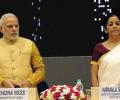
Modi, after delivering his sixth straight address to the nation on Independence Day from the ramparts of the Red Fort in New Delhi, went into a brainstorming session with Sitharaman and all top officials in her ministry, sources privy to the development said. T

During the meeting with Finance Minister Nirmala Sitharaman, the auto industry broadly presented factors such as issues regarding availability and affordability of financing, increasing cost of acquisition of vehicles and change in axle load capacity for commercial vehicles that have hurt demand.

Auto Expo's Twitter handle (@AEMotorShow), with a follower base of 16,000, is abuzz with activity. The Facebook page of Auto Expo has about 158,000 followers.

It came on the back of tepid dispatches in the March quarter as consumer sentiment took a knocking, owing to uncertainty ahead of the general election.

Large number of buyers has put purchases on hold because of a combination of factors, including high fuel prices, higher insurance cost, and firm interest rates.
An increase in sales across all categories in the automobile industry, has made need for higher working capital inevitable.

According to the latest data from SIAM, in the top 10 best passenger vehicles, Maruti's Alto retained the top position last month
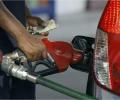
The share of diesel vehicles sold in 2014-15 was 37 per cent.

Prices of two-wheelers, passenger and commercial vehicles are set to rise 15-25%

China's covid crisis could provoke a raw material crunch for India's EV industry later this year.

Market linking of petrol and diesel prices has helped the industry.

In June, the new government led by Narendra Modi extended the excise duty concession by six months to December 31, which is not being further extended.

General Motors' Tavera recall prompts Union government to formulate a stricter policy.

Cars priced above Rs 25 lakh account for 1 per cent in India's 3 million-car market and the share has remained unchanged over the last five years.

The new tax regime has also been fuelling sale of SUVs, particularly the compact SUVs

Passenger vehicle wholesales in India rose by 14.16 per cent in August to 2,15,916 units, driven by pent-up demand, industry body SIAM said on Friday. According to the latest data by the Society of Indian Automobile Manufacturers, passenger vehicle wholesales stood at 1,89,129 units in the same month last year.

Cumulative sale at India's top six passenger vehicle (PV) makers dropped 0.7 per cent to 267,000 units, from 269,000 a year before.

Reflecting the woes of the Indian automobile industry, the country's car exports remained flat at 550,466 units in 2013-14, during which domestic sales fell for the second consecutive year.

Maruti Suzuki India's grip on the country's car market tightened in October with six of its models, including the newly launched mid-sized sedan Ciaz, featuring in the top 10 selling brands in the month.

The Interceptor 650 and Continental GT 650 have been game changers in the upper part of the mid-size segment, with compelling style and highway capability.

Mahindra is the latest among a clutch of other manufacturers that have been using services, fuel efficiency and packages as unique selling proposition. Sales of Mahindra's heavy trucks dropped to 3,427 units in the eight months from April to September.

Top companies across sectors -- automobile maker Maruti Suzuki, consumer electronics giant Samsung to IT giant Infosys -- have reopened factories and offices as India took its first steps towards resuming economic activity after weeks under a near-total coronavirus lockdown.

This will ensure its vehicles reach dealers much faster and delivered to buyers in a maximum of three days, reports Shally Seth Mohile.

Tata Motors Chairman Cyrus Mistry said the company was poised for an 'inflection', even as it revamped its entire product portfolio.

From Hyundai to Tata Motors, automakers are staring at a bleak future. With no succor provided in the Budget, the pain for companies is likely to continue for the next two quarters.

The company is banking on investments lined up for product development and other innovations.

Among other things, the agenda is likely to focus on increasing private investment, employment generation and giving relief to the farm sector

Some of the notable models set to make a debut next year include the Tata Harrier, the Mahindra S201, the Kia SP Concept, MG Motors' Boujun 530, and the Honda HR-V.

Maruti's Alto retained the best-selling model tag in January with 22,998 units as against 21,462 in January 2016.
Maruti Suzuki said there are many reasons for this downturn in the auto market such as liquidity crunch, increased prices of products due to regulatory issues, higher taxes and rise in insurance rates.

'It is going to be as high as 50% in the coming one or two months and can be about 20% to 25% in the medium term.'

At present, there are many vehicles that weigh close to the proposed increased weight of 600 kg.

While two-wheeler sales are down 15 per cent year-on-year, passenger vehicles sales are lower by 5-7 per cent.

The first half of 2019-20 will be under pressure, since prices are expected to go up by Rs 7,000-8,000 at a time when sentiment is poor.

November IIP data show a fall of over 20%, led by automobiles, gems & jewellery and home appliances; turnaround seen as unlikely.

The list clearly shows the dominance of Maruti and Hyundai in the Indian passenger vehicle market.
 © 2026 Rediff.com - Advertise with us - Disclaimer - Privacy Policy - Sitemap - Feedback - About us - Terms of use - Grievances